10 ESP32 smart-home projects with ESPHome and Home Assistant
From DHT22 rooms sensors to mmWave presence, relays, CO₂ and e-paper displays—ESP32 + ESPHome ideas by difficulty.

Getting started
Home Assistant
Buying
From DHT22 rooms sensors to mmWave presence, relays, CO₂ and e-paper displays—ESP32 + ESPHome ideas by difficulty.
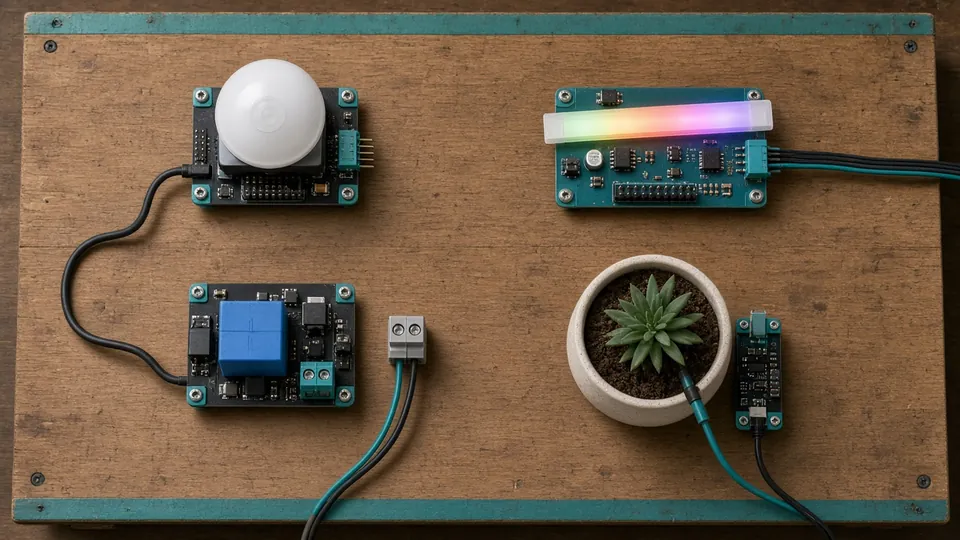
AI-generated illustration
Also available in French.
ESP32 + ESPHome turns a cheap Wi-Fi microcontroller into sensors, relays and displays that Home Assistant discovers natively. Ten starter projects by skill level—verify part prices at order time. Hub: all smart-home guides · getting started.
In the US, a 5 V USB adapter (phone charger) is enough for most bench builds; ESPHome pushes firmware over Wi-Fi and Home Assistant sees new nodes on your LAN without a cloud account. Start with one room sensor, then add relays or presence only where DIY saves money versus off-the-shelf Zigbee.
| Part | Typical use | Check price (affiliate) |
|---|---|---|
| ESP32-C6 DevKitC | Wi-Fi 6, Matter-ready, good default in 2026 | Amazon UK · Amazon US |
| Classic ESP32 DevKit | Most tutorials and forum examples | Which ESP32 board? |
We may earn a commission at no extra cost to you. Guide price: check offers on the retailer site before you buy.
Skill key: Beginner = breadboard + USB power; Intermediate = mains-safe relay logic or multiple I2C sensors; Advanced = displays, voice or air-quality stacks. Each idea below links to a deeper guide where we have one — start with ESPHome temperature for project 1.
ESP32 + DHT22 per room. Full walkthrough: ESPHome temperature sensor.
GPIO button fires a Home Assistant event—alarm, notify, “all off” scene.
binary_sensor:
  - platform: gpio
    pin: GPIO4
    name: "Panic button"
    on_press:
      - homeassistant.event:
event: panic_buttonRGB strip shows house state—green OK, red window open, blue away.
BME280 (temp, humidity, pressure) + optional BH1750 light—automate blinds from lux.
Drive fan, pump or gate logic—not mains unless you know electrical code; prefer certified in-wall relays for 230 V / 120 V loads.
Off-the-shelf Wi-Fi relay alternative: Shelly 1 Gen4 (local integration in HA).
Detects still occupants—better than PIR for desks and beds.
2.9″ e-paper shows temp and forecast without a bright always-on LCD.
Alert and boost ventilation above ~1000 ppm. Pi + SCD41 MQTT path: Raspberry Pi CO₂.
Wake word and commands without Google/Alexa cloud—requires HA voice pipeline setup.
Hall sensor on utility meter impulses—track water or (where legal) electricity pulses.
| ESP32 + ESPHome | Zigbee | |
|---|---|---|
| Pros | Any I2C/GPIO sensor, often cheaper parts | Battery, no USB cable |
| Cons | Needs 5 V USB (usually) | Needs coordinator |
Docs: esphome.io · Community: Home Assistant forum.
Related: garage door on ESP32 · Install Home Assistant.
Was this page helpful?
Thank you!
What should we improve?
Torn between two models or stuck on a build? Drop us a line and we will get back to you by email.
Cookies and analytics
We use Google Analytics 4 to understand how the site is used (page views, navigation). It is only switched on if you accept. Declining does not stop you using the site. More: cookie settings and privacy policy (in French).